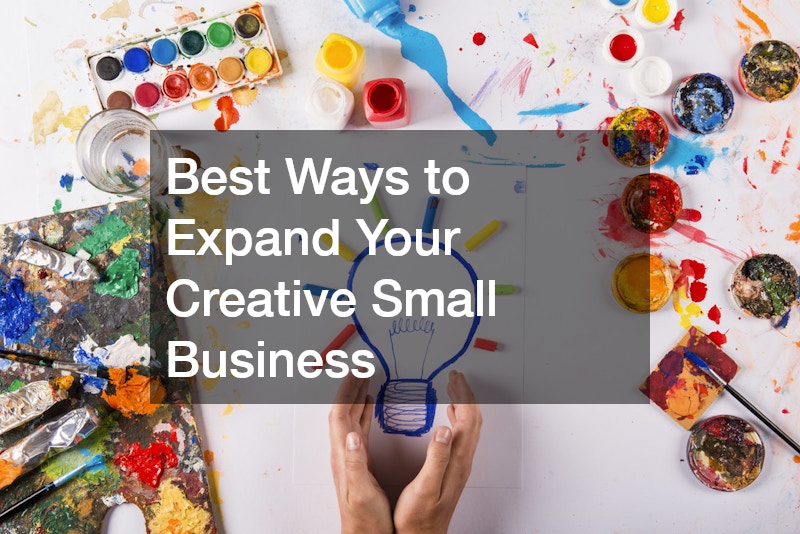
Expanding a creative small business in today’s competitive landscape requires more than just artistic talent; it requires a strategic blueprint for growth that balances imagination with operational efficiency. For many makers and boutique service providers, the dream is to transition from a side hustle or a solo operation into a robust, sustainable enterprise. However, growth often brings a unique set of challenges—how do you increase output without sacrificing the “handmade” quality that your customers love? How do you reach new markets without losing the local charm that defines your brand?
To scale effectively in 2026, you must stop viewing business tasks as a distraction from your art and start viewing them as the framework that protects it. By diversifying how you earn, who you partner with, and how you produce, you can build a company that thrives even when you aren’t physically at the workbench. This guide provides an in-depth exploration of ten high-impact strategies designed to help you broaden your horizons, increase your professional footprint, and turn your creative passion into a scalable powerhouse.
I. Build a Multi-Tiered “Experience” Model

One of the most precarious positions a small business can be in is relying on a single source of income. If you only sell finished physical products, your income is strictly capped by your production capacity and the whims of the retail market. To expand, you must look at your creative process as a multi-faceted asset that can be sold in various formats.
Consider the atmosphere of a fine dining restaurant. The success of such an establishment isn’t just the food on the plate; it’s the choreography of the service, the knowledge of the sommelier, and the exclusivity of the environment. As a creative, you should look for ways to offer “tiered” experiences. This means moving beyond a “one-price-fits-all” model. You might have entry-level products for the general public, but you should also develop a “Reserve” or “Private Collection” for your most dedicated patrons. This high-touch model allows you to command higher prices while producing less volume, protecting your time and creative energy. It’s about selling the experience of your brand, not just the object.
II. Productize Your Industry Expertise
Look at the technical side of your craft. If you are a musician or audio engineer, you likely have specialized skills that others covet. Instead of just selling songs, you can pivot into record production for emerging artists. By shifting from a service provider to a producer, you leverage your expertise to help others succeed.
This creates a B2B revenue stream that often carries higher stability than B2C sales. When you produce for others, you aren’t just selling your time; you are selling your “ear” and your industry authority. This diversification creates a financial cushion, allowing you to invest back into your primary art during slower seasons. Perform a “Skills Audit” to see what part of your process is invisible to the customer but highly valuable to a peer.
III. Form Alliances with Complementary Makers
Expansion doesn’t always have to happen internally. Some of the fastest growth occurs when two businesses combine their strengths to reach a shared audience. This is particularly effective for creative businesses that have a strong local or niche following.
Take, for example, a textile artist or a bespoke clothing designer. While you might spend your days behind a sewing machine creating unique garments, your growth might be limited by your boutique’s foot traffic. By collaborating with a local interior design firm or a high-end lifestyle boutique, you can place your items in front of a curated audience that already values craftsmanship. These partners act as a “warm lead” generator, introducing your brand to customers who have already been vetted for quality appreciation. You are essentially “borrowing” the trust that the other business has built with its clientele over years.
IV. Source Sustainable Materials via Local Networks
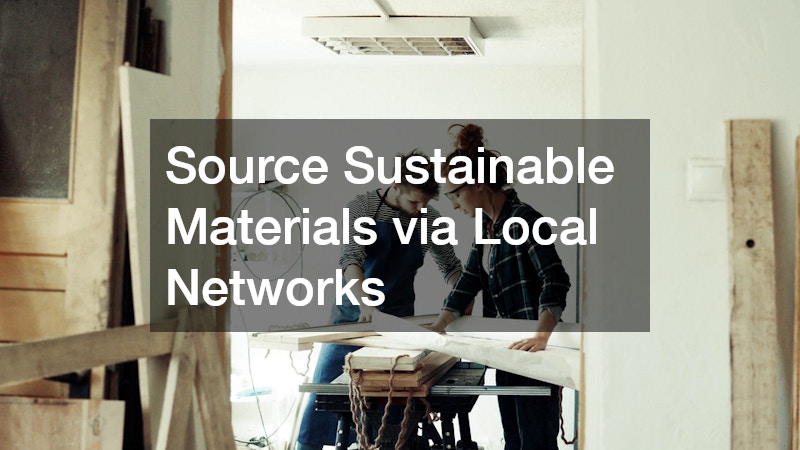
Consider the “Circular Economy” approach to product development. Partnering with thrift shops or vintage curators can lead to a successful “Upcycled” line. You can source raw materials from their unsold inventory—perhaps high-quality leathers or rare fabrics—and transform them into high-value art pieces.
This not only lowers your Cost of Goods Sold (COGS) but also aligns your brand with the growing consumer demand for sustainability. These collaborations foster community goodwill and provide a constant stream of fresh, unique materials that keep your product line evolving. By telling the story of where your materials came from, you add a layer of narrative depth that mass-produced competitors simply cannot replicate.
V. Automate the “Drudge Work” of Fabrication
There comes a point in every creative business where manual labor becomes the bottleneck. You cannot scale a mountain if you are carrying every stone yourself. Expansion requires investing in infrastructure—both digital and physical—that multiplies your efforts.
For those working in hardware or industrial arts, precision and speed are the two pillars of growth. If your workflow involves manual fabrication, moving to industrial metal cutting machinery or CNC technology can be a game-changer. Many creators fear that automation “robs” the art of its soul, but the opposite is true. Automation removes the repetitive, non-creative tasks that lead to physical burnout. It allows you to maintain the “handmade” feel of your products while removing the time-intensive nature of the rough-cut phase. This shift allows you to focus your energy on the artistic finishing touches.
VI. Streamline Shipping with Custom Packaging Tools
On the logistics side, shipping costs and packaging time are often the silent killers of creative profits. As your volume grows, generic boxes often lead to wasted space and increased shipping fees.
Investing in a used box making machine can be a brilliant move for a scaling business. It allows you to create custom-fit packaging for every order on demand, regardless of the item’s dimensions. Not only does this reduce your shipping costs and carbon footprint, but it also elevates the unboxing experience for the customer. In a world of generic mailers, receiving a perfectly fitted, sturdy custom box makes your small business feel like a premium, professional operation.
VII. Pivot into the High-Value Events Industry

In an era of digital saturation, people are hungrier than ever for real-world experiences. Creative businesses are uniquely positioned to capitalize on this. By moving your business into the “event space,” you can access high-ticket contracts that are far more lucrative than individual retail sales.
If your creative business involves fabrication, staging, or design, consider the events industry as your next frontier. For instance, expanding your inventory to include dance floor rental or custom-designed event backdrops can open doors to the massive wedding and corporate gala market. These are high-demand items that can be rented out dozens of times, paying for themselves while requiring minimal creative labor once the initial design is complete. You transition from selling a product once to “selling” the same item fifty times a year.
VIII. Offer On-Site Artisanal Services
Furthermore, you can offer specialized services that add value to existing events. A custom framing service, for example, doesn’t have to wait for customers to walk into a shop. By setting up a mobile “finishing station” at art fairs or high-end photography expos, you can provide immediate gratification to buyers.
Framing a piece of art the moment it is purchased ensures the buyer’s investment is protected and adds a professional polish to the entire event experience. This proactive approach to sales positions you as a solution provider, not just a vendor. It’s about identifying the “point of highest excitement” for your customer and being there to enhance it.
IX. Monetize Your Workspace through Education
Seasonality is the heartbeat of the creative world. Instead of fighting the natural ebbs and flows of the year, successful businesses learn to lean into them. One of the most effective ways to do this is through education and mentorship.
If you have a studio or a workshop space, consider hosting a creative summer camp for young creators or hobbyists. This model allows you to monetize your space and your knowledge simultaneously. It builds a community around your brand and introduces the next generation to your craft. Education is a highly scalable product; once the curriculum is built, your primary cost is simply your time and space. Moreover, these students often become your most loyal brand advocates.
X. Integrate Botanical Aesthetics into Your Brand

If your work is nature-based or aesthetic-focused, you can expand into living products. A flower greenhouse integrated into a creative studio can serve as a secondary revenue stream and a beautiful marketing tool.
You can sell seasonal arrangements, host “sip and snip” workshops, or provide botanical styling for other businesses. By linking your creative output to the cycles of nature, you ensure that there is always something new and exciting for your customers to engage with. It provides a visual “refresh” for your brand every few months, keeping your social media content vibrant and your customer base curious. This expansion into “lifestyle” branding makes your business more immersive and harder for competitors to copy.
Expanding your creative small business is not about working harder; it is about working with greater leverage. It requires you to look at your business not just as a place where you “make things,” but as an ecosystem of value. By diversifying your income, building strategic alliances, investing in the right tools, and engaging with your community through events and education, you transform your passion into a powerhouse.
The transition from artist to entrepreneur is a creative act in itself—a design project where the final product is a thriving, sustainable life. As you look toward the future, remember that the most successful businesses are those that stay true to their vision while remaining flexible in their execution. Build the systems that support your art, and your art will support your life. Focus on the long game: a business that grows at a steady, manageable pace is far more valuable than one that explodes and burns out. Be intentional, stay curious, and never stop refining your craft.
How do you currently track which of your creative services provides the highest return on your time?
The journey from a solo creator to a business owner with a scalable enterprise is rarely a straight line. It is a process of constant iteration, requiring you to apply the same creative problem-solving skills to your spreadsheets and systems that you apply to your primary craft. As you move through the phases of expansion—whether that involves mastering the logistics of a used box making machine or curating an experience as refined as a fine dining restaurant—the ultimate goal is to build a business that serves your life, rather than a business that consumes it.
Scaling a creative venture is inherently personal. It requires a deep understanding of your “Value Prop”—the specific thing you do that cannot be replicated by an algorithm or a mass-market factory. As you invest in infrastructure like metal cutting technology or expand into high-ticket events with dance floor rental, you aren’t just buying equipment or inventory; you are buying back your time. That reclaimed time is the most precious resource a creative has, as it allows you to return to the “dreaming phase” of your work, where the next big innovation is born.
Furthermore, expansion is an act of community building. When you open a flower greenhouse or host a summer camp, you are inviting the world into your creative process. You are moving from a transactional model—selling an object for a price—to a relational model, where your brand becomes a staple of your customers’ lifestyles. This transition is what creates “moats” around your business. A competitor might be able to copy your product, but they cannot copy the community you have built or the unique authority you established through record production or a specialized custom framing service.
As you look toward the future, remember that growth should never come at the expense of your mental or creative health. Sustainable expansion is about finding the “Goldilocks” zone—growing fast enough to capture market opportunities, but slowly enough to ensure your systems and your soul can keep up. Use the tools available to you, from the humble sewing machine to the most advanced CNC routers, to amplify your voice. Partner with local thrift shops to ground your brand in sustainability and authenticity.
The most successful creative entrepreneurs of 2026 are those who view their business as their greatest masterpiece. It is a living, breathing work of art that requires pruning, nourishment, and a clear vision. By implementing the strategies outlined in this guide, you are doing more than just “expanding”; you are professionalizing your passion and ensuring that your creative voice will be heard for years to come. The world needs more people who have successfully turned their art into their livelihood. Now is the time to build the framework that makes that possible.